CASE FILE No. 008 · ON RECORD
DEVLANDS · EDUCATIONAL-CODING TOOL
A developer’s mindset, applied to marketing.
CASE FILE No. 008 · ON RECORD
WHO THEY ARE
A solo developer who wanted to market the way he builds.
THE FILE
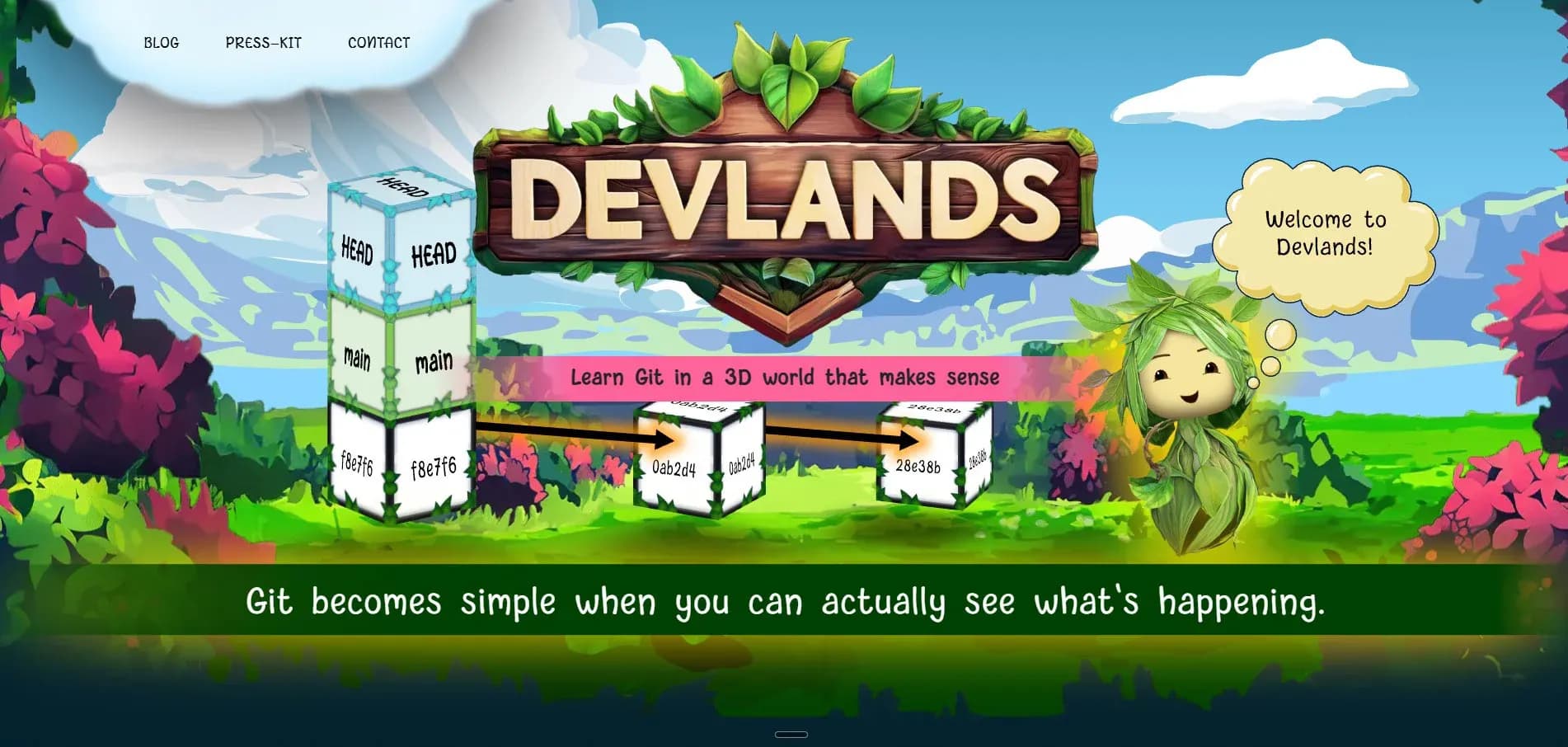
Devlands is a gamified developer tool in the educational-coding space, built by a solo developer who wanted to take it to market the way he builds software: iteratively, from real data, not from guesswork.
Over a two-month engagement, we ran the full marketing lifecycle end to end — strategy through demo and launch — and the developer on the other side of it described the experience better than we could.
Educational-coding · developer tools — A side venture taken to market the way its founder builds software — iteratively, from real data
Marketing Strategy · Audience Research & Analysis · Landing Page Copy · Email Sequences · Social Media Ad Campaigns · Demo & Launch Support
A developer audience reads marketing the way it reads code.
Developers are a skeptical audience. They notice when a claim isn’t backed by evidence, and they trust a process they can reason about over a pitch they can’t. Marketing to them is less about persuasion and more about being demonstrably right.
That made the iterative method an unusually natural fit: hypothesis, test, measure, iterate — the same loop they live in when they ship software. The approach didn’t have to be sold to this founder; it just had to be recognized.
FROM THE FILE
The same loop as shipping software.
Hypothesis, test, measure, iterate. For a developer, the marketing method clicked immediately — it’s the build loop, pointed at an audience instead of a feature.
WHAT WE ACTUALLY DID
We took Devlands from strategy through demo and launch.
WHAT WE BUILT
- Marketing strategy. A detailed plan for taking a gamified dev tool to market on a modest budget.
- Audience research & analysis. Studied who the tool was actually for, and how they decide.
- Landing page copy. Multiple messaging versions to test, not one guess to defend.
- Email sequences. Two relationship-building sequences built in Mailchimp.
- Ad campaigns. Social media campaigns written and launched as calculated tests.
- Demo & launch support. We were there through the demo release and launch.
OUR APPROACH
Don’t guess whether something will work. Design a cheap way to find out.
The engagement ran on the principle Wabbit is built around. Small, calculated “shots” to learn about the audience; scale what works; discard — while learning from — what doesn’t. On a modest budget, that means spend goes toward generating data, not toward assumptions, and every result, win or lose, sharpens the next move.
We even built data-generating ideas into the product itself, so the app could surface insights about its own users — turning the tool into a source of evidence, not just a thing to advertise.
THE PRINCIPLES
- Spend on data, not assumptions. Every dollar buys a result you can learn from.
- Scale the wins, learn from the losses. Nothing is wasted if it sharpens the next move.
- Make the product generate its own evidence. Build the learning loop into the app.
The product itself was built to generate insight about its own users — turning the tool into a source of evidence, not just a thing to advertise.
FROM THE FILE
Spend that buys data, not assumptions.
On a modest budget, every campaign is a calculated test. Scale what works, discard — while learning from — what doesn’t, and let the results sharpen the next move.
HYPOTHESISDeveloper-to-developer register beats marketing polish
METRICReal clicks, real signups — not opinions
BUDGETSmall, deliberate, data-buying
Every campaign, run like a deploy.
Test — small paid spend, two variants, one week.
Read — behaviour data over stated intent, every time.
Ship or revert — winners scaled, losers archived with notes the next test builds on.
— the method, as run
THE OUTCOME
We won’t claim a business result here, because there isn’t one to claim.
We took Devlands from strategy through demo and launch. Then — and we’ll be straight about this, because that’s how we work — the project went quiet. Devlands is a side venture, and after launch its founder returned his focus to his full-time job.
The cold ending is reported as fact, not softened — a side venture's founder returned to his day job after launch.
So we won’t claim a business result here, because there isn’t one to claim. What this engagement proves is the method — and what it’s like to be on the receiving end of it. The two reviews below, both verified on Upwork, articulate that better than we could.
There is no business result to claim. What ships instead is the method, verified by two Upwork-confirmed reviews.
The marketing engine we built — the validated messaging, the email sequences, the campaign framework — is still there for whenever he picks it back up.
MORE FROM THE FIELD
See the rest of the work.
CASE FILE
Made being wrong cheap
Validation · kids' EdTech
LiteStreet
Read the case file →CASE FILE
751 competitors
The first proof of the method
751 / WBFF
Read the case file →
WHERE THIS STARTS
Book the Architecture Sprint
Devlands wanted to market the way good software gets built — from evidence, not guesswork. The Sprint is how we design the cheapest way to find out what works for you, before anyone spends real money scaling it.