CASE FILE
LEAF LOFT BOTANICALS · EXOTIC-PLANT E-COMMERCE
An education-first launch that found its market.
THE ENGAGEMENT
WHO THEY ARE
Founders who already had the audience — and needed the machine to serve it.
Austin and Kelsey came to the engagement with real assets already in hand: deep plant expertise, a clear aesthetic, and their own network of early customers. They knew the product. What they needed was a build partner and someone who could help them think through positioning and validation before over-investing in the wrong direction.
The context matters here. This engagement happened through BetaBlox, the accelerator where David works with early-stage founders. The validation method — start cheap, prove demand before scaling, lead with education to reduce purchase anxiety — is the approach Wabbit brings to this kind of work, applied to their business. The plant knowledge and customer relationships were theirs.
A pandemic boom — with the rare end left underserved.
The houseplant market grew significantly in 2020 as people sought ways to bring life into locked-down homes. Most plant retailers focused on common varieties available at big-box stores, leaving the rare and exotic end of the market underserved.
The timing was legitimately favorable — the housing boom sent a lot of people to houseplants, and that tailwind was real, not something we engineered. What we helped with was structuring the launch so they could prove demand quickly and build an operation the two of them could actually run.

THE BRAND
A lifestyle shift, not a decoration purchase.
Working with the direction Austin and Kelsey already had, we refined the visual approach to position plants as a transformation — framing that supported premium pricing and drew customers investing in a change, not buying a commodity.
The styling and identity carried through to every surface: the product pages, the care guides, and the photography all lived in the same world.

THE CHALLENGE
Selling living things online to people who have probably killed their last plant.
Two problems sat underneath every sale — and a layer of operational reality the two-person team had to live with.
THE REAL CONSTRAINTS
- The trust problem. People want to see, touch, and inspect plants before buying. Selling living things online requires building confidence before the transaction.
- The education gap. Most plant failures happen because buyers do not know how to care for what they bought. Confidence in keeping the plant alive had to come before confidence in buying it.
- Operational reality. A two-person team needed to manage inventory without constant technical overhead, support sourcing relationships they already had, and absorb pandemic shipping restrictions and plant-health logistics.
OUR APPROACH
Position as the trusted guide for urban plant parents — not the cheapest catalog.
Rather than competing on price or catalog size, we positioned Leaf Loft as the trusted guide for urban plant parents. Three decisions shaped the build.
THE THREE DECISIONS
- Lead with education, not products. The site functioned as a resource center first and a store second — care guides and educational content built confidence before presenting inventory.
- Curate, not catalog. A focused selection of plants suited to urban living, each with detailed guidance, rather than trying to match big-box volume.
- Build for the operators, not just the customers. The backend let Austin and Kelsey manage listings, update inventory, and handle shipping logistics without ongoing technical support.
WHAT WE BUILT
Visual foundation, an education-first store, and systems the two of them could run.
THE THREE PHASES
- Visual foundation. We refined the direction they already had to frame plants as a lifestyle shift centered on transformation — positioning that supported premium pricing and drew customers investing in a change.
- Education-first e-commerce. The website became a resource center before it was a store: care instructions per variety, troubleshooting guides, room-by-room recommendations for urban spaces, and seasonal care adjustments. Customers felt supported rather than sold to — and the plant knowledge behind it was Austin and Kelsey, not us.
- Operational systems. A custom inventory setup — template-based product creation, integrated care-instruction management, seasonal availability tracking, and customer-communication automation for shipping updates — so the team could focus on sourcing and relationships while routine operations ran in the background.
THE STOREFRONT
A resource center that also sold plants.
The Leaf Loft site opened on education — care guides, variety breakdowns, room-by-room recommendations — before it presented anything to buy. The store was the second act, not the headline.

THE EDUCATION LAYER
A resource center before it was a store.
Care guides, troubleshooting, room-by-room recommendations, and seasonal adjustments — built around the specific varieties they carried, so confidence in keeping the plant alive came before confidence in buying it.

CARE ON EVERY DEVICE
The care guide followed the plant home.
The care instruction system was built to be accessible wherever the plant was — the content that reduced return anxiety and kept customers coming back was the same content that turned a first-time buyer into a repeat one.

THE PHOTOGRAPHY
Product photography built for the rare end of the market.
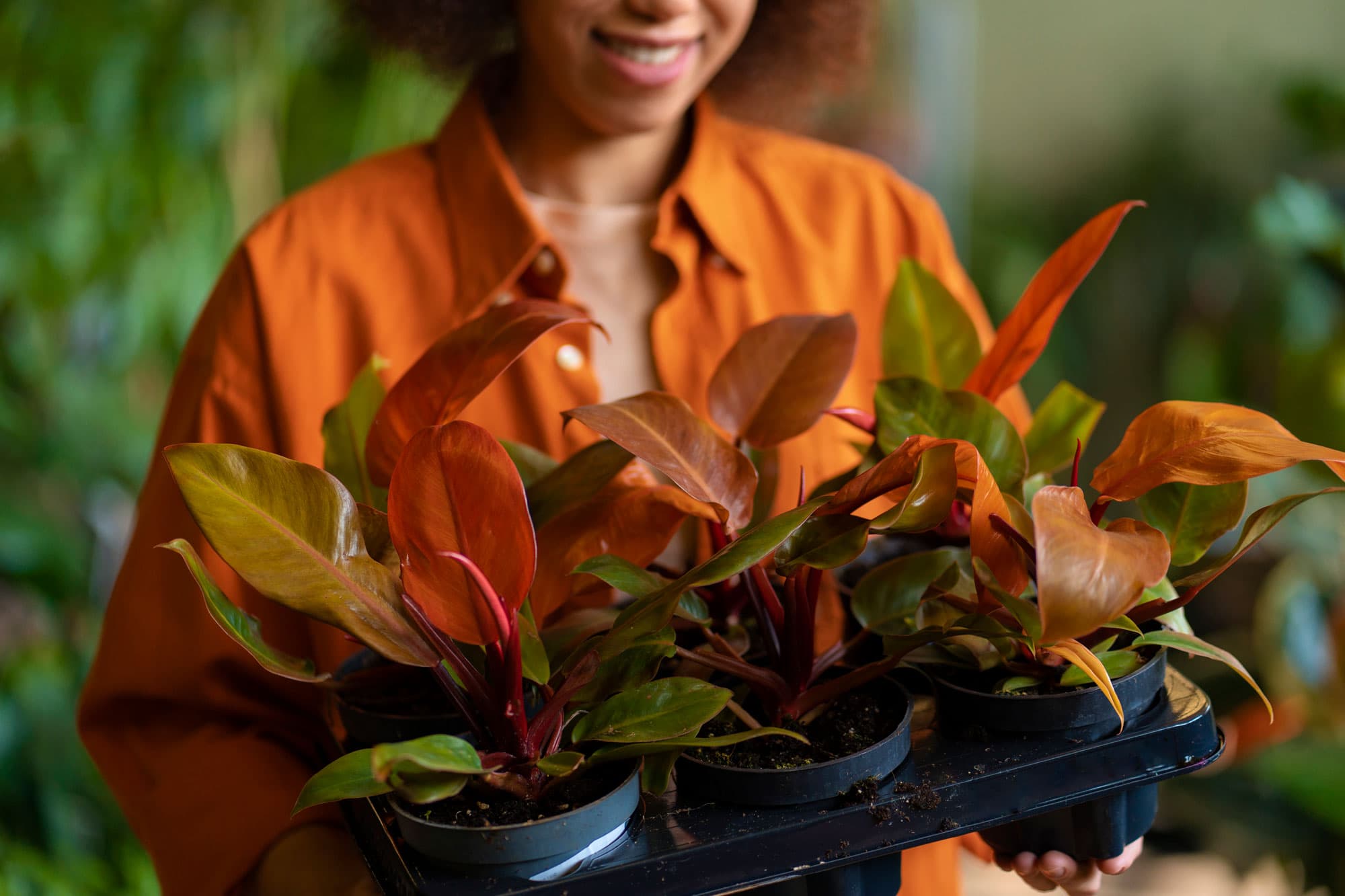
The catalog imagery was designed to match the positioning — premium, curated, not big-box. Each shot reinforced the lifestyle framing and gave the product pages the visual weight that rare plants command.

The customer Leaf Loft was built for — urban, considered, looking for something the big-box store doesn't carry.

The transformation framing — plants as a shift in how you inhabit a space, not a decoration purchase.
THE OPERATIONS
The backend the two of them could actually run.
Template-based product creation, integrated care-instruction management, seasonal availability tracking, and customer-communication automation — so the team could focus on sourcing and relationships while the routine operations ran in the background.

THE OPERATORS
The people who knew the plants.
The build was designed around the people running it. Austin and Kelsey had the expertise — in plants, in sourcing relationships, in customer curation. The systems freed them to use it.

THE OUTCOME
The audience was theirs. We helped them build the machine to serve it.
The initial inventory sold out within the first week — a strong early signal that the positioning and launch structure worked. Six months in, the primary operational challenge had shifted from finding customers to keeping enough inventory, which is a good problem to have.
At roughly one year in, Austin reported the business was clearing about $7,500/mo in profit. That figure is his direct report, witnessed during the engagement — not a metric we instrumented.
A founder-reported figure, not something we tracked ourselves.
The pandemic tailwind was real — we will not pretend otherwise. What the build added was a structure that let their genuine expertise — in plants, in customer relationships, in curation — come through clearly and convert. The founders brought the audience; we helped them build the machine to serve it.
After roughly three years of steady operation, Austin and Kelsey chose to close Leaf Loft and move on to new projects. That was their call, made on their own terms. The business had worked.
Education-first works in any product category where a customer feeling of success determines whether they come back. It is not a plant-specific tactic.
MORE FROM THE FIELD
See the rest of the work.
CASE FILE
Six years
A business built around life
AbleVeg
Read the case file →CASE FILE
$250 → $15M → collapse
Forex education platform
The Swag Academy
Read the case file →
WHERE THIS STARTS
Book the Architecture Sprint
Leaf Loft needed a launch that proved demand before over-investing, and an operation two people could actually run. The Sprint is how we figure out which system matters most for you — before anyone spends a dollar building it.