TOME — THE COMMERCE ENGINE
Sell from the site you already run, and keep the ledger in it.
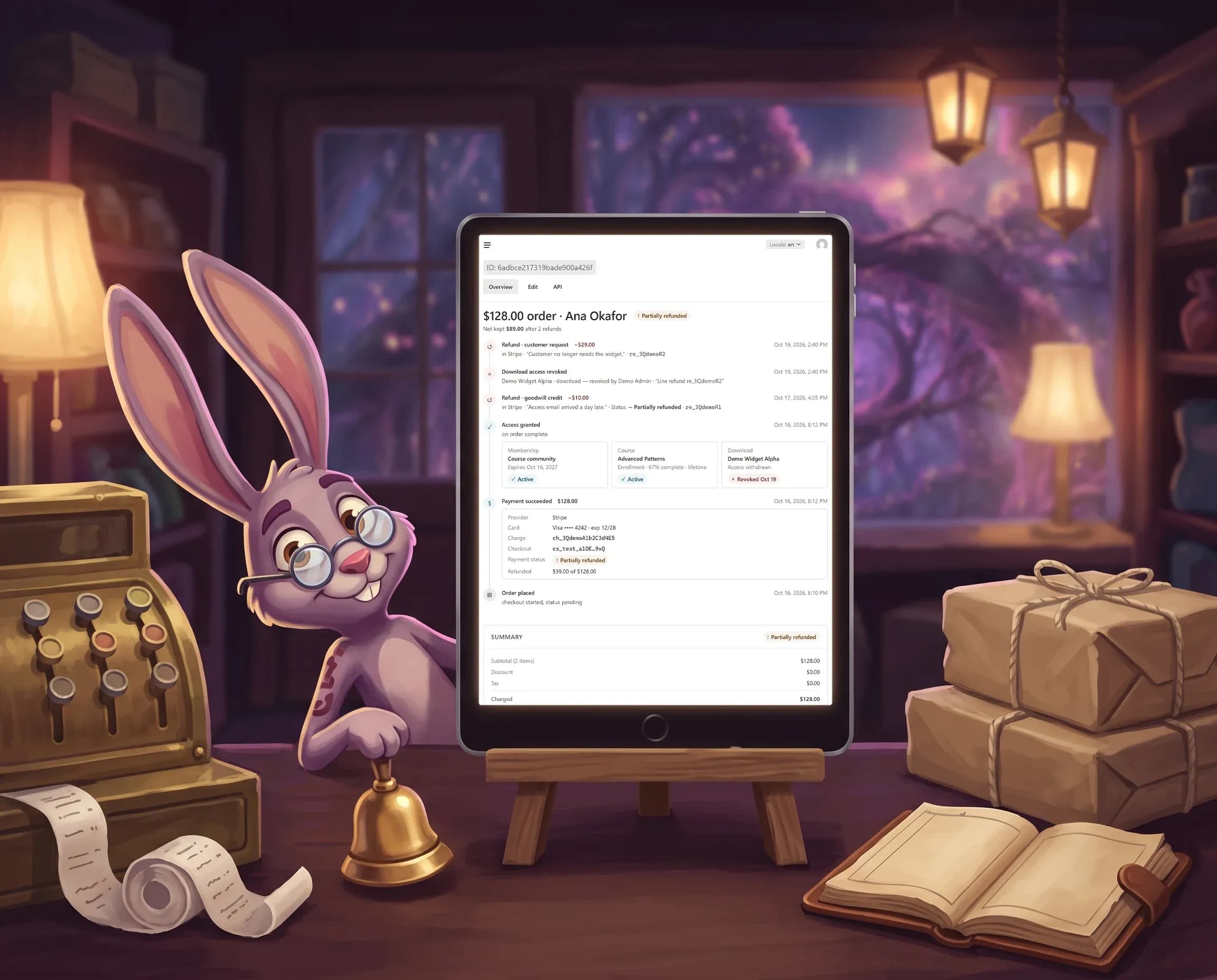
Products, checkout, subscriptions and payouts, on the same foundation as everything else we build. The Commerce engine is the part of Tome that takes money. Every order, payment and refund lands in your own Payload admin, next to the customer who made it.


Most sites take payments somewhere else and find out later what happened.
A checkout plugin sends the buyer to a hosted page, a webhook comes back when it remembers to, and the record of who paid for what lives in the processor's dashboard. Access to what they bought gets granted by hand, or by a second plugin that reads the first. Refunds happen in one place and nobody tells the other.
Selling has rules of its own. What a buyer gets the moment a payment clears, and what they lose when a subscription ends. Which affiliate earns the commission, and when it can be paid out. What happens to a pledge when a campaign misses its goal. The Commerce engine keeps those rules in your own Payload admin, against the same accounts the rest of the site uses.
What's in it
Everything between the product page and the payout.
Products with variants, typed attributes, categories and media,
each kind of product registered with its own fields.
Checkout through Stripe for one-time purchases and subscriptions,
with a customer portal, saved cards and refunds, every one recorded as an order and a payment in your admin.
Authorize.Net as a drop-in alternative for industries Stripe won't serve,
including recurring billing reconciled every night.
Access that follows the money:
a purchase grants what the buyer paid for, and a canceled subscription takes it back.
Addresses, shipments with tracking, a stock ledger and flat-rate shipping
for physical goods.
An affiliate program
with signed terms, tracked referrals, commissions held until they're safe to pay, and payouts through Stripe Connect.
All-or-nothing crowdfunding:
the card is saved at the pledge and charged only if the campaign reaches its goal.
What it runs

Our own checkout, today.
wabbit.com takes its own payments on this engine. Plan and pack purchases, course sales and proposal deposits are orders in it, and each one grants its access the moment Stripe confirms the payment.
The blocks and the docs are open to read before you talk to us.
- A business selling access, such as courses, memberships or downloads, where paying grants it at once and canceling takes it back.
- A subscription business that wants its customers, orders and refunds in the same admin as the rest of its site.
- A brand running an affiliate program, with signed terms and commissions held until they're safe to pay.
- A project raising money up front, where backers are charged only if the campaign reaches its goal.
A store with a few products and no plans to grow past them is well served by Shopify.
The engine starts earning its keep when payments have to grant access, pay affiliates or run on your own accounts.
Getting it
$400 a year, or included with Agency.
Request it on any plan, including the free one.
Commerce is the one engine we set up with you, because a mistake in the payment path costs real money. Agency already includes every engine.
The quickstart walks through the wiring, and if you're weighing a hosted store instead, the comparison lays the two side by side.